
West Valley Housing Market Update: July 2026

West Valley Housing Market Update: July 2026
The July 2026 West Valley real estate market report examines housing activity recorded during June 2026 across 11 Phoenix West Valley communities.
TL;DR
- Pending sales fell approximately 31% from May to June, making future buyer demand the most important number to watch.
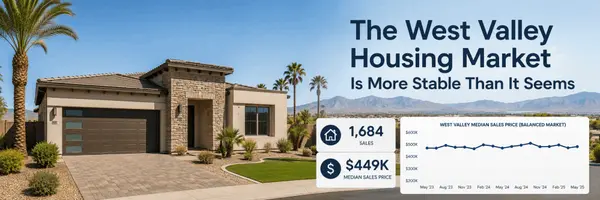
- The West Valley median sale price increased to approximately $449,052 and remained within its recent range.
- Active inventory held steady at 6,051 homes, nearly unchanged from the same period last year.
- With 4.1 months of supply and an average marketing time near 84 days, the West Valley remains relatively balanced.
What Happened in the West Valley Housing Market?
The data does not point to a dramatic collapse in home values or a sudden increase in inventory. Instead, it shows a relatively stable market with one notable warning sign: a sharp decline in pending home sales.
According to the Downs RE Legacy Team, pending sales are the most important metric to monitor moving into the remainder of the summer. Pending contracts often become the closed sales reported in future months.
This West Valley report includes communities throughout the western Phoenix metropolitan area, including Goodyear, Buckeye, Avondale, Litchfield Park, Surprise, Waddell, Peoria, and surrounding areas.
Are West Valley Home Sales Slowing Down?
Yes, closed sales have moved lower since their spring peak, although the decline has been moderate.
The West Valley recorded 1,676 closed home sales in June 2026. That was below the March total of 1,782 sales.
The difference between March and June was 106 sales, or approximately 6%. This indicates a slowdown from the spring peak, but not a severe drop in completed transactions.
Key Insights
- June closed sales: 1,676
- March closed sales: 1,782
- Change from March: Approximately 6% lower
- Market interpretation: Sales activity has softened, but the decline remains relatively modest
Seasonal behavior may be part of the explanation. Real estate activity often changes during the summer as families travel, temperatures rise, and some buyers and sellers temporarily pause their plans.
What Is the Median Home Price in the West Valley?
The median West Valley sale price was approximately $449,052 in June 2026.
That represented an increase from approximately $443,000 in May. However, it remained below the March level of approximately $456,000.
The price changes have stayed within a relatively narrow range. The difference between the March high and the June median was approximately $7,000, or about 1.5%.
Key Insights
- June median sale price: $449,052
- May median sale price: Approximately $443,000
- March median sale price: Approximately $456,000
- Monthly direction: Higher from May to June
- Broader direction: Prices remain within a relatively stable range
This does not mean every West Valley neighborhood is moving at the same pace. Prices can vary significantly between Goodyear, Buckeye, Avondale, Peoria, Surprise, Litchfield Park, Waddell, and individual master-planned communities.
A city-level or neighborhood-level analysis is more useful when determining the value of a specific property.
Is West Valley Housing Inventory Increasing?
West Valley housing inventory remained remarkably stable.
There were 6,051 active listings in June 2026, compared with approximately 6,083 during the same period one year earlier.
That is a difference of only 32 homes across the combined West Valley market.
Direct Answer
West Valley inventory is not showing a major year-over-year increase. Active listings in June 2026 were approximately one-half of 1% below the comparable level from the previous year.
Key Insights
- June 2026 active listings: 6,051
- Comparable previous-year inventory: 6,083
- Year-over-year difference: 32 fewer listings
- Market interpretation: Available inventory is essentially flat
Stable inventory helps explain why home prices have not experienced a dramatic decline despite softer buyer activity.
Are Fewer Homeowners Listing Their Homes?
Yes. The number of new listings entering the West Valley market declined again in June.
The market received 2,012 new listings in June, down from 2,226 in May. Earlier in the spring, monthly new-listing totals were closer to 2,500.
From May to June alone, new listings fell by approximately 9.6%.
Why Are New Listings Declining?
The decrease may be partly seasonal. Some homeowners avoid listing during the hottest portion of the Arizona summer or postpone a move while traveling.
It may also reflect the continued mortgage-rate lock-in effect. This occurs when homeowners with older, lower mortgage rates are reluctant to sell and replace those loans with higher-rate financing.
Regardless of the cause, fewer new listings can reduce the number of fresh choices available to West Valley buyers.
Why Did Pending Home Sales Drop?
Pending sales produced the most significant change in the June market report.
A pending sale is a property that has an accepted purchase contract but has not yet completed closing.
West Valley pending sales fell from 1,648 in May to 1,131 in June. That represents a decline of approximately 31.4% in one month.
Direct Answer
The June decline in pending sales suggests that substantially fewer West Valley homes entered into purchase contracts. Unless pending activity rebounds, this could lead to fewer closed sales in July or August.
The data does not yet confirm whether this is the beginning of a longer slowdown or a temporary timing issue. Some contracts may have been concentrated in May rather than June, and seasonal buyer behavior may also have contributed.
Key Insights
- May pending sales: 1,648
- June pending sales: 1,131
- Monthly decline: 517 pending sales
- Percentage decline: Approximately 31.4%
- Why it matters: Pending sales often indicate future closing activity
According to the Downs RE Legacy Team, this is the metric that deserves the closest attention in the next West Valley market report.
How Long Does It Take to Sell a West Valley Home?
The West Valley’s average cumulative days on market reached approximately 83.8 days in June 2026.
Cumulative days on market measures the total marketing time associated with a property, including time from previous listing periods when applicable.
The standard days-on-market figure was closer to 80 days. The difference suggests that relisting activity can make some homes appear newer in the MLS even though their total marketing period has been longer.
What Does 83.8 Days Mean for Sellers?
It does not mean every property will take nearly three months to sell.
A well-priced home in excellent condition may sell quickly. An overpriced property, a home with deferred maintenance, or a property facing significant competition may remain available much longer.
The average combines both fast-selling homes and properties that require several months or multiple pricing adjustments to attract a buyer.
Key Insights
- Standard average marketing time: Approximately 80 days
- Cumulative days on market: 83.8 days
- Recent trend: Fairly steady
- Seller takeaway: Prepare for a potentially longer marketing period and price based on current competition
Is the West Valley a Buyer’s or Seller’s Market?
The West Valley had approximately 4.1 months of housing supply in June 2026.
Months of supply estimates how long it would take to sell the current inventory at the existing sales pace if no additional homes were listed.
A lower supply generally favors sellers. A higher supply generally favors buyers.
At approximately 4.1 months, the West Valley is operating in a relatively balanced range. Conditions can still favor one side of the transaction depending on price point, neighborhood, property type, and competition.
Direct Answer
The West Valley is currently closer to a balanced market than an extreme buyer’s or seller’s market.
Buyers generally have more choices and negotiating opportunities than they did during the highly competitive markets of previous years. Sellers can still succeed, but pricing and property preparation are increasingly important.
How Much Are Buyers Negotiating?
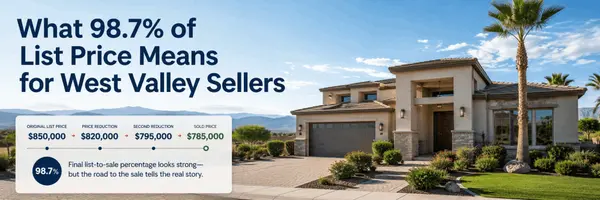
The average West Valley home closed approximately 1.3% below its final list price.
For example, a home with a final list price of $500,000 would be approximately $6,500 lower at a 1.3% difference, resulting in a price near $493,500 before considering other contract terms.
However, the difference from the original list price, including the effect of seller concessions, was closer to 4%.
Seller concessions may include contributions toward a buyer’s closing costs, mortgage-rate buydowns, repairs, or other negotiated expenses.
Key Insights for Buyers
- Some sellers are accepting offers below the final asking price.
- Seller concessions may be available depending on the property.
- Negotiating strength varies by neighborhood, condition, and days on market.
- The most desirable homes may still receive stronger competition.
Key Insights for Sellers
- An unrealistic original price can lead to reductions and a longer marketing period.
- The final financial difference may exceed the visible price reduction.
- Concessions can affect the seller’s net proceeds.
- Pricing correctly at the beginning may reduce the need for later adjustments.
What Is West Valley Inventory Turnover?
Approximately 33% of active West Valley inventory turned over during the month.
Inventory turnover, sometimes described as market churn, measures how much of the available housing supply is being replaced or absorbed through sales and new listing activity.
A 33% turnover rate indicates that the market is moving, but buyers are not absorbing inventory at an exceptionally fast pace.
This reinforces the broader picture of a functioning but more deliberate housing market.
Why Is Pipeline Efficiency Above 100%?
West Valley pipeline efficiency was approximately 101.7%.
This metric compares closed sales with pending activity from a previous period. A result above 100% does not mean every pending transaction closed or that more than 100% of contracts succeeded.
Instead, the number can be temporarily elevated when closings include contracts written more than one month earlier.
Direct Answer
Pipeline efficiency exceeded 100% because June closings included transactions that originated in earlier months, while the number of newer pending contracts declined.
Longer escrow periods, delayed closings, and calendar differences can cause closed sales in one month to exceed the immediately preceding month’s pending total.
The positive side is that existing transactions were continuing to close. The concern is that the lower number of new pending contracts may leave fewer transactions available to close in a future month.
How Much Real Estate Sold in the West Valley?
The combined dollar volume of West Valley home sales was approximately $829 million in June 2026.
The comparable previous-year total was approximately $763 million. This represents an increase of roughly $66 million, or approximately 8.7%.
In March 2026, sales volume reached approximately $890 million, compared with roughly $790 million during the corresponding period in the prior year.
Key Insights
- June 2026 sales volume: Approximately $829 million
- Comparable previous-year volume: Approximately $763 million
- Approximate increase: $66 million
- Percentage increase: Approximately 8.7%
Sales volume is influenced by both the number of homes sold and the prices of those homes. It should not be interpreted as a stand-alone measurement of property appreciation.
What Does This Market Mean for West Valley Buyers?
West Valley buyers currently have more time and negotiating flexibility than buyers had during the most competitive years of the Arizona housing market.
With 4.1 months of supply, approximately 6,051 active listings, and an average marketing time near 84 days, some sellers may be willing to consider:
- Offers below the asking price
- Closing-cost assistance
- Mortgage-rate buydowns
- Repair requests
- Flexible closing or possession dates
Buyers should not assume that every home is overpriced or that every seller will negotiate. Well-maintained homes in desirable Goodyear, Litchfield Park, Peoria, Surprise, Buckeye, Avondale, and Waddell locations may still sell quickly.
A property-specific analysis is more reliable than applying market-wide averages to every listing.
What Does This Market Mean for West Valley Sellers?
West Valley sellers should enter the market with realistic expectations.
The median price remains relatively stable, but buyers have enough inventory to compare homes carefully. Properties that are overpriced, poorly presented, or in need of repairs may sit on the market longer and eventually require price reductions or concessions.
A strong selling strategy should include:
- Pricing based on current competing homes
- Professional photography and marketing
- Repairs or improvements that address buyer objections
- Regular reviews of showing activity and feedback
- A plan for adjusting the strategy when the market does not respond
According to the Downs RE Legacy Team, sellers should evaluate the entire financial outcome, not just the final contract price. Closing-cost assistance, repairs, and other concessions can affect net proceeds.
The Bottom Line
The June 2026 West Valley housing data describes a relatively stable but slower-moving market.
Prices remained within their recent range. Active inventory was almost unchanged from the prior year. Months of supply remained near 4.1, and cumulative days on market held close to 84 days.
The most significant development was the approximately 31% monthly decline in pending home sales.
That decline does not prove that the West Valley is entering a major downturn. However, it may result in fewer closed transactions later in the summer unless buyer activity recovers.
Buyers may find opportunities to negotiate, particularly on homes that have been available for an extended period. Sellers should focus on accurate pricing, preparation, and a strategy that accounts for both price negotiations and concessions.
For a housing report focused on Goodyear, Buckeye, Avondale, Litchfield Park, Surprise, Waddell, Peoria, or another West Valley community, contact the Downs RE Legacy Team at West USA Realty.
Frequently Asked Questions
Is the West Valley housing market declining?
The market is showing slower activity, but the June 2026 data does not show a major decline in home prices or a large increase in inventory. The median price remained near $449,052, while active inventory was almost unchanged from the previous year.
Why are West Valley pending sales important?
Pending sales represent homes with accepted purchase contracts that have not yet closed. Because many pending transactions become future closed sales, a decline in pending activity can indicate fewer completed sales in upcoming months.
How much did West Valley pending sales fall in June 2026?
Pending sales fell from 1,648 in May to 1,131 in June. That was a decrease of 517 contracts, or approximately 31.4%.
How long are West Valley homes taking to sell?
Cumulative days on market averaged approximately 83.8 days in June 2026. Individual results vary based on price, location, condition, property type, and competition.
Can buyers negotiate with West Valley sellers?
Negotiation may be possible, especially for homes that have been on the market longer or face substantial competition. On average, homes closed approximately 1.3% below their final list price, with the total difference from original price approaching 4% when concessions were considered.

Tim Downs
Downs RE Legacy Team
West USA Realty
Serving Goodyear and the Phoenix West Valley
Phone: 623-624-8275
Website: downsre.com
Categories
Recent Posts